Chapter 9
PC Operating Systems in the 1980s
The Rise of the GUI
While the personal computer hardware of the 1980s offered increasing power, it was the operating system that provided the interface between the user and the machine, managing resources and allowing applications to run. This decade saw a crucial transition from command-line to graphical user interface-based operating systems, a shift that made personal computers much more accessible and intuitive.
9.1 MS-DOS:
The Dominator of the First Half of the Decade
For much of the 1980s, the dominant operating system for the IBM PC and its many clones was MS-DOS (Microsoft Disk Operating System) . Acquired by Microsoft from Seattle Computer Products (where it was originally called 86-DOS), MS-DOS was a relatively simple operating system, based on a command line interface (CLI).
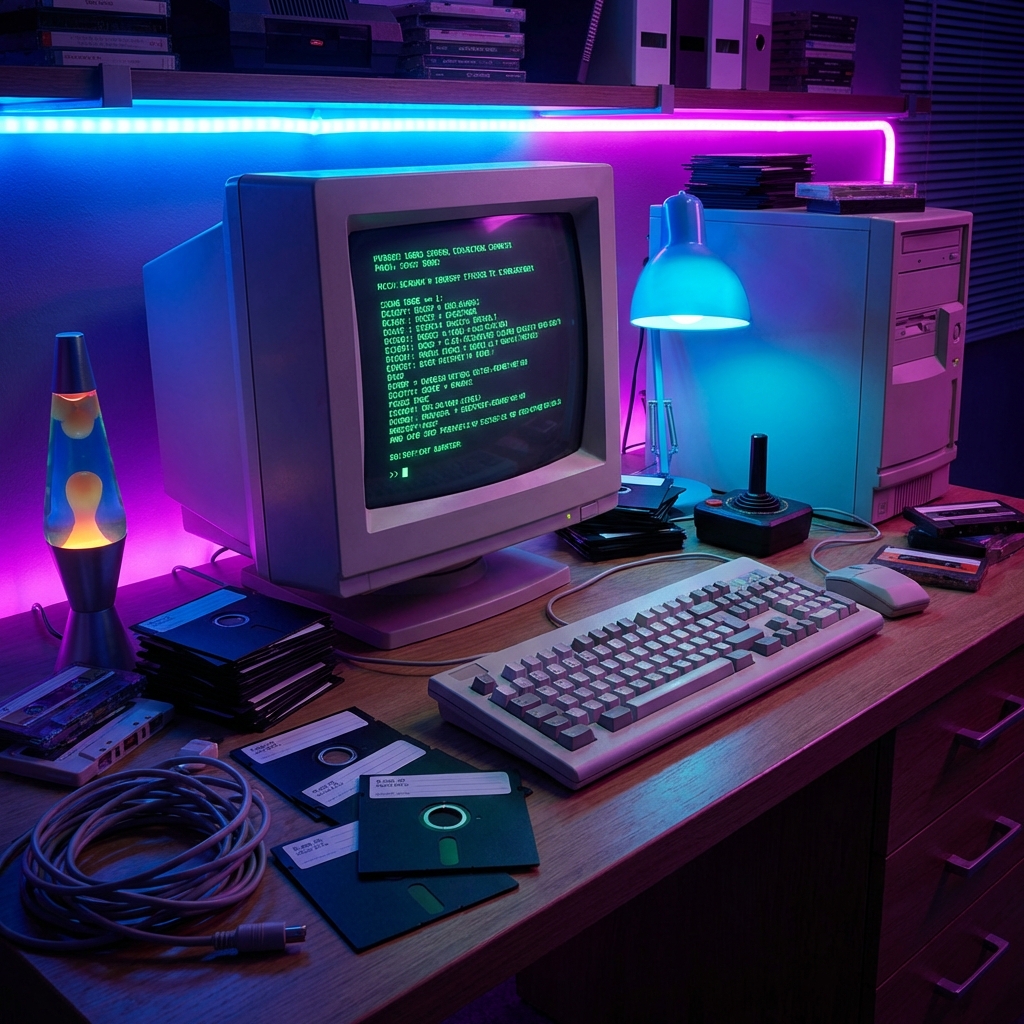
In MS-DOS, the user interacted with the computer by typing text commands at the prompt. To run a program, navigate through files, or perform other operations, you needed to know the syntax of the appropriate commands (such as DIR to view the list of files, COPY to copy files, CD to change directories, etc.).
Although MS-DOS was functional and allowed running a wide range of applications, it had some significant limitations in terms of usability for less experienced users:
- Unintuitive interface: Required memorizing numerous commands and their precise syntax.
- No built-in support for multitasking: It was difficult to run multiple programs at the same time.
- Limited memory management: The original IBM PC architecture imposed a 640 KB limit on conventional memory, creating problems for more resource-intensive applications.
- Limited graphics: The interface was primarily text-based, with limited, application-dependent graphics support.
Despite these limitations, MS-DOS remained the most popular operating system for compatible IBM PCs through much of the 1980s, due to its broad hardware compatibility and large number of available applications.
9.2 The Advent of GUIs:
A New Era for User Interaction
The graphical user interface (GUI) represented a radical change in the way users interacted with computers. Instead of typing text commands, users could interact with the system through graphical elements on the screen, such as icons, windows, menus, and buttons, using a pointing device such as the mouse. GUIs made computers much more intuitive and easy to use, opening doors to a wider audience.
- Apple Macintosh System Software: The Pioneer of Usability: The Macintosh, launched in 1984, was the first commercially successful personal computer to use a graphical user interface as an integral part of its operating system. The Macintosh System Software (later called macOS) featured a desktop environment with icons representing files and applications, windows to view content and pull-down menus to access commands. Using the mouse to point and click on elements on the screen made the interaction much more direct and visual. The Macintosh's design philosophy focused on usability and interface consistency, creating an intuitive user experience even for beginners.
- GEM (Graphics Environment Manager): An Attempt at a GUI for MS-DOS: Digital Research, the company that originally developed the CP/M operating system (a precursor to MS-DOS), launched GEM (Graphics Environment Manager) in 1985. GEM was a graphical environment that could be runs on top of MS-DOS, providing an icon-, window-, and menu-based interface. Although not as successful as the Macintosh, GEM offered IBM PC compatible users an early alternative to the command line interface and was used as the basis for some popular applications, such as the desktop publishing software Ventura Publisher.
- Ventura Publisher and Aldus PageMaker: The GUI in the Service of Graphics: Applications such as Ventura Publisher (originally for GEM) and Aldus PageMaker (primarily for Macintosh, but later also available for Windows) demonstrated the potential of the GUI for complex graphics applications such as desktop publishing. The ability to manipulate visual elements directly on the screen revolutionized the way documents, magazines and newspapers were created.
9.3 Microsoft Windows:
From Beginnings to Domination
Microsoft, despite having initially focused on the MS-DOS command line operating system, recognized the importance of graphical interfaces and launched the first version of Microsoft Windows in November 1985.
- Windows 1.0 (1985): A Modest Beginning: Windows 1.0 was more of a graphical operating environment than a truly complete operating system. It ran on top of MS-DOS and provided an interface based on tiled windows (non-overlapping in the first version), icons, and limited mouse support. Its initial adoption was slow, partly due to the hardware limitations of PCs at the time and the limited availability of Windows-specific applications.
- Windows 2.0 (1987) and Windows 3.0 (1990): The Growing Success: Subsequent versions of Windows brought significant improvements. Windows 2.0 introduced overlapping windows and better memory management. However, it was with Windows 3.0 , launched in 1990, that Microsoft achieved enormous commercial success. Windows 3.0 offered a more refined user interface, better support for graphics and multitasking, and more efficiently took advantage of the capabilities of the Intel 286 and 386 processors. The success of Windows 3.0 marked the beginning of its rise as the dominant operating system for compatible IBM PCs, a role it would maintain for decades. During this period, Windows continued to rely on MS-DOS for some low-level functionality.
9.4 Other Operating Systems with GUI:
Alternatives to the IBM/Microsoft Domain
While the world of IBM PC compatibles was dominated by MS-DOS and, towards the end of the decade, Windows, other platforms had their own GUI operating systems:
- Commodore AmigaOS: The Amiga's operating system, AmigaOS , was technologically very advanced for its time. It offered true preemptive multitasking (the ability to run multiple programs at the same time efficiently), a full-color graphical interface with icons and windows, and a powerful audio and video subsystem. AmigaOS was particularly popular for its multimedia capabilities and flexibility.
- Atari TOS (Tramiel Operating System): The Atari ST used TOS (Tramiel Operating System) , an operating system that included a graphical interface called GEM (developed by Digital Research, as previously mentioned). TOS offered a user interface similar to that of the Macintosh and was known for its speed and relatively low cost. It found its niche market, especially in the music and low-cost desktop publishing sectors.
- NeXTSTEP: An Innovative Interface (with Future Impact): Developed for the NeXT computers, founded by Steve Jobs after his departure from Apple, NeXTSTEP was a Unix-based operating system with a very advanced and powerful object-oriented graphical user interface development tools. Although NeXT computers were not very commercially successful in the 1980s, NeXTSTEP had a significant influence on the future of computing, with many of its ideas later found in macOS.
9.5 The Coexistence of CLI and GUI:
A Hybrid World
Importantly, even as GUIs increased in popularity, command-line operating systems such as MS-DOS remained important throughout the decade. Many users, especially those with more technical familiarity, preferred the speed and flexibility of the CLI for some operations. Additionally, many applications continued to be developed specifically for MS-DOS. The transition to GUIs was gradual and, for many years, the two types of interfaces coexisted.
9.6 The Impact of the GUI on Users and Software:
Computer Science Becomes Accessible
The introduction of graphical user interfaces had a profound impact on the way people interacted with computers:
- Greater accessibility: GUIs made computers much easier to use for people without specific technical training, opening the world of computing to a wider audience.
- New interaction paradigms: The use of the mouse and icons introduced new ways of interacting with the computer, based on the direct manipulation of objects on the screen.
- Influence on software design: The GUI profoundly influenced application design, leading to the development of more visual and interactive software, with menus, dialog boxes, and toolbars that made features easier to use.
The 1980s were a period of great excitement for personal computer operating systems, marked by the fundamental transition from command line interfaces to graphical user interfaces.
While MS-DOS dominated the early part of the decade in the world of IBM PC compatibles, the innovative GUI of Apple's Macintosh opened up new perspectives on usability. The emergence of graphical environments such as GEM and the subsequent rise of Microsoft Windows demonstrated the growing importance of GUIs. Other platforms such as the Amiga and Atari ST also offered advanced graphical interfaces for their time. The introduction of the GUI made personal computers much more accessible and intuitive, significantly contributing to their mass adoption and profoundly influencing software design for decades to come.