Chapter 25
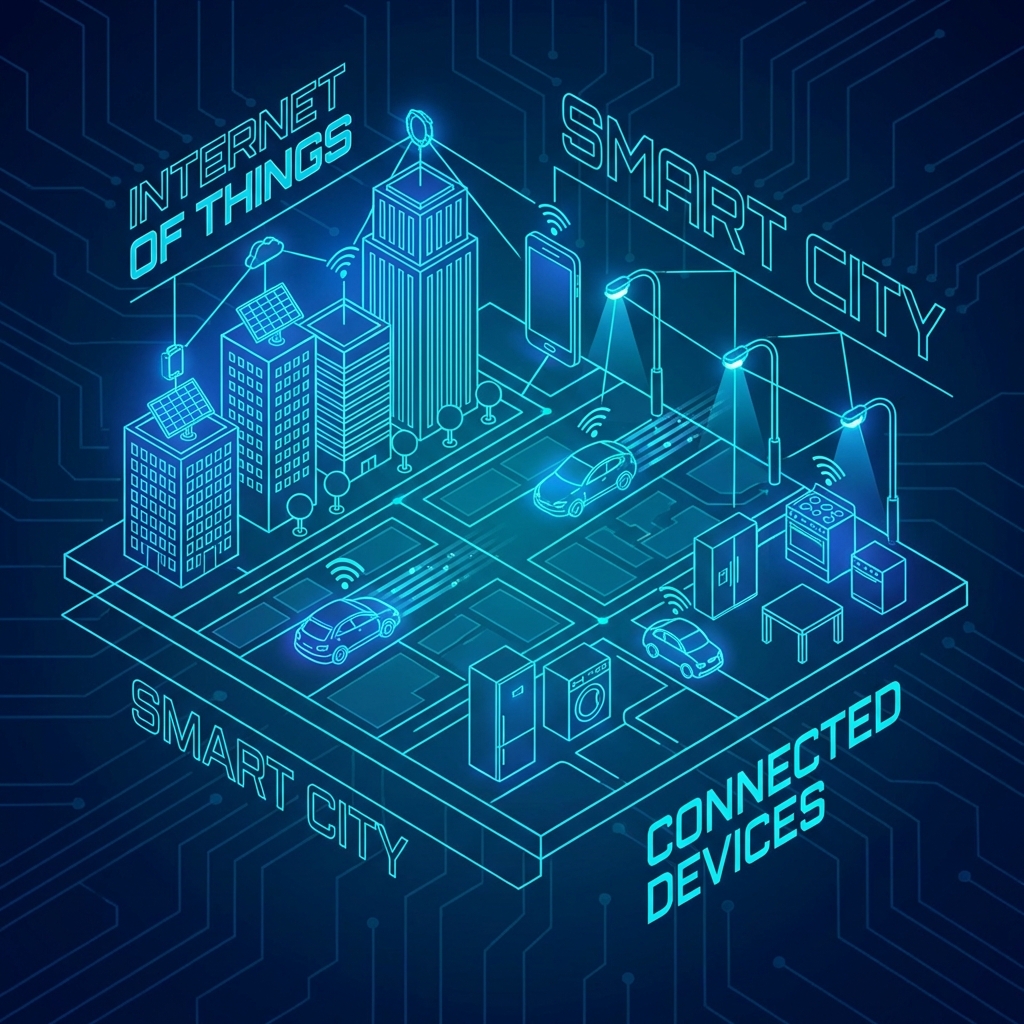
The Evolution of the Internet of Things (IoT)
The decade 2010-2020 witnessed the maturation and large-scale diffusion of the Internet of Things (IoT) , a network of physical objects (“things”) integrated with sensors, software and other technologies that allow them to collect and exchange data. This evolution radically transformed the way we interact with the world around us, leading to smart homes, connected cities, automated industries, and much more.
25.1 Definition and Key Concepts:
A World of Connected Objects
The Internet of Things (IoT) can be defined as a network of physical objects, devices, vehicles, buildings, and other elements embedded with electronics, software, sensors, and network connectivity that allow these objects to collect and exchange data. This data can then be analyzed to gain actionable insights, automate processes and improve efficiency.
Key components of an IoT ecosystem include:
- Devices (Things): Physical objects equipped with sensors, actuators and processing capabilities. These can range from simple temperature sensors to complex industrial systems.
- Sensors and Actuators: Sensors collect data from the environment (temperature, humidity, motion, light, etc.), while actuators perform actions in response to the received data (e.g., turning on a light, closing a valve).
- Connectivity: IoT devices must be able to connect to the Internet or other networks to transmit the collected data. Common connectivity technologies include Wi-Fi, Bluetooth, cellular networks (2G, 3G, 4G, LTE, NB-IoT, LTE-M), and low-power, wide-reach networks (LPWAN) such as LoRaWAN and Sigfox.
- IoT Cloud Platform: Data collected by IoT devices is typically sent to a cloud platform where it is stored, processed and analyzed. These platforms also offer tools for device management, data visualization, and IoT application development.
- Applications: IoT applications use the collected data to provide services and functionalities to users, such as remote control of devices, process automation, predictive maintenance, and data analytics to obtain useful insights.
Related concepts include edge computing , which involves processing data closer to the source (on the device or at a local gateway) to reduce latency and improve responsiveness, and digital twins , virtual representations of physical assets, processes or systems that are updated in real time with data from IoT devices for simulation, optimization and predictive maintenance.
25.2 Key Drivers of Growth:
The Convergence of Enabling Technologies
Several factors contributed to the rapid growth of the IoT in the decade 2010-2020:
- Reducing Hardware Costs: The cost of sensors, microcontrollers, and other electronic components needed to build IoT devices dropped significantly, making IoT more accessible for a wide range of applications.
- Improvements in Connectivity: Wireless communication technologies became more efficient and versatile. Wi-Fi remained a popular choice for home and business applications. Bluetooth Low Energy (BLE) became established for low-power devices such as wearables. Cellular networks continued their evolution, offering ever wider coverage. The emergence of LPWANs such as LoRaWAN and NB-IoT provided low-cost, long-range connectivity solutions for applications requiring long battery life and large area coverage.
- Cloud IoT Platforms: Major cloud service providers (such as Amazon with AWS IoT , Microsoft with Azure IoT , Google with Google Cloud IoT ) developed complete and scalable IoT platforms, offering services for device management, data storage and analysis, security and application development. These platforms greatly simplified the creation and management of complex IoT solutions.
- Advances in Data Analytics and AI: The enormous amount of data generated by IoT devices required advanced tools and techniques for analysis. Advances in big data analytics and artificial intelligence (AI) made it possible to extract valuable information from this data, leading to more intelligent and automated IoT systems capable of making decisions based on the collected data.
25.3 IoT Applications by Sector:
A Connected World
IoT found applications in a wide variety of industries, transforming processes and creating new opportunities:
- Smart Home: The smart home became a reality for many consumers, with devices such as smart speakers (Amazon Echo, Google Home), smart thermostats (Nest), connected lighting systems (Philips Hue), smart security cameras, and connected appliances offering greater convenience, energy efficiency, and security.
- Wearables: Wearable devices such as smartwatches (Apple Watch, Fitbit) and fitness trackers became popular for monitoring health and well-being, tracking physical activity, sleep, heart rate and other biometric parameters.
- Smart Cities: Smart cities used IoT to improve urban management, with applications such as intelligent traffic management, adaptive public lighting, environmental monitoring (air quality, pollution levels), waste management and smart parking systems.
- Industrial IoT (IIoT): Industrial IoT transformed manufacturing processes, enabling predictive maintenance (monitoring the condition of machines to predict failures), asset tracking , optimization of production processes , advanced quality control and improvement of worker safety.
- Healthcare IoT: In the healthcare sector, the IoT enabled remote patient monitoring (via wearable devices or implanted sensors), management of connected medical devices, telemedicine and more efficient management of drug supplies.
- Agriculture IoT: Precision agriculture used IoT for crop monitoring (soil moisture, temperature, weather), livestock management (tracking, health monitoring), optimizing resource use (water, fertilizer), and automated harvesting.
- Retail IoT: In the retail industry, IoT was used for inventory management, tracking customers within stores, offering personalized promotions via beacons, and implementing smart shelves that monitored stock.
25.4 Challenges and Considerations:
Barriers to IoT Pervasiveness
Despite its many benefits, the IoT faced several significant challenges:
- Security: The security of IoT devices became a primary concern, given the large amount of connected devices and their potential vulnerability to cyberattacks, which could lead to data breaches, unauthorized control of devices, and even large-scale attacks via IoT botnets.
- Privacy: The collection and use of personal data by IoT devices raised important privacy issues. The amount of information collected (from consumer habits to biometric data) and how it was used required greater transparency and regulation.
- Interoperability and Standardization: The lack of common standards and limited interoperability between devices and platforms from different manufacturers represented an obstacle to creating seamless and integrated IoT ecosystems.
- Data Management and Analysis: Managing and analyzing the enormous flow of data generated by IoT devices required specialized infrastructure and skills.
- Reliability and Scalability: The reliability and scalability of IoT solutions, especially for critical applications such as industrial or healthcare, were key to ensuring their success.
- Environmental Impact: The production, use and disposal of an ever-increasing number of connected electronic devices raised concerns regarding environmental impact.
25.5 Emerging Trends and Future Prospects:
The Next Level IoT
Toward the end of the decade, trends emerged that would shape the future of IoT:
- Edge Computing: Processing data closer to the source (at the edge) became a key trend to reduce latency, improve privacy, and enable IoT applications in environments with limited connectivity.
- 5G and IoT: The deployment of 5G networks promised to enable more advanced IoT applications thanks to higher bandwidth, lower latency, and a higher density of supported connections.
- Artificial Intelligence and IoT (AIoT): The integration of AI and ML with IoT data allowed for the creation of more intelligent and autonomous systems capable of learning from data, making decisions and optimizing operations without constant human intervention.
- Digital Twins: The use of digital twins spread across various industries, enabling the simulation, optimization, and predictive maintenance of complex assets and processes based on IoT data in real time.
25.6 Conclusion:
The decade 2010-2020 saw the Internet of Things transform from a promise to a widespread reality, with applications touching almost every aspect of our lives. The continuous evolution of enabling technologies and the growing awareness of the potential of the IoT suggested a future in which more and more objects would be connected and intelligent, leading to new opportunities and challenges for society.